How Things Work: An Introduction to Physics (Coursera)

How Things Work: An Introduction to Physics (Coursera)

An introduction to physics in the context of everyday objects.

Class Deals by MOOC List - Click here and see Coursera's Active Discounts, Deals, and Promo Codes.

Syllabus

WEEK 1
Course Introduction

WEEK 2
Skating
Professor Bloomfield examines the principle of inertia through skate boarding. Objects at rest tend to remain at rest while objects in motion, tend to remain in motion. Why does a stationary skater remain stationary? Why does a moving skater tend to continue moving? How can we describe the fluid, effortless motion of a coasting skater? How does a skater start, stop, or turn? Why does a skater need ice or wheels in order to skate? Physics concepts covered include Newton's first and second laws and 5 physical quantities: position, velocity, acceleration, force, and mass.

WEEK 3
Falling Balls
Professor Bloomfield examines the physics concepts of gravity, weight, constant acceleration, and projectile motion working with falling balls.

WEEK 4
Ramps
Professor Bloomfield examines the physics concepts of Newton's third law including conserved quantities, support forces, work, energy, and mechanical advantage working with ramps.

WEEK 5
Seesaws
Professor Bloomfield illustrates the physics concepts of rotational versus translational motion, Newton's law of rotation, and 5 physical quantities: angular position, angular velocity, angular acceleration, torque, and rotational mass using seesaws.

WEEK 6
Wheels
Professor Bloomfield illustrates the physics concept of frictional forces through experiments with wheels.

WEEK 7
Bumper Cars
Professor Bloomfield examines the physics concepts of momentum, impulse, angular momentum, angular impulse, and the relationship between potential energy and force using bumper cars.

WEEK 8
Final
This is the final exam.
Go to Class
MOOC List is learner-supported. When you buy through links on our site, we may earn an affiliate commission.

Related Courses

电磁学上——恒定电场 (Coursera) Coursera
Peking University

电磁学上——恒定电场 (Coursera)

电磁学是普通物理系列中最重要的基础课之一,是高等学校每一个理工科学生必修课程,本课程包括静电场、恒磁场、电磁感应、电磁介质、电路、麦克斯韦电磁场理论、电磁波等内容,首次系统地向学生介绍“场”的概念和处理“场”的方法,对学生今后学习和工作有深远的影响。本课程作为中国大学先修课(AP课程)向有志于学习物理及相关专业的学有余力的优秀中学生开放,培养学科兴趣,提高科学素养,打下扎实的物理基础。

Jun 15th 2026
5-12 Weeks
Fundamentals of Fluid-Solid Interactions (Coursera) Coursera
École Polytechnique

Fundamentals of Fluid-Solid Interactions (Coursera)

What is fluid-solid interactions ? It is what happens when the motions of a fluid and of a solid are somehow coupled. This happens all the time, around you when leaves flutter in the wind, inside you when your heart beats, above you when wings of a plane vibrate, under the sea... The idea behind this MOOC is to give you the basic tools to be able to predict and eventually mitigate things called flutter, galloping, sloshing, vortex-induced vibrations, added mass, to cite a few. We are going to consider any possible domains of applications such as civil engineering, aerospace engineering, nuclear engineering , ocean engineering, biomechanics and even food processing !

Jun 15th 2026
5-12 Weeks
The Little Stuff: Energy, Cells, and Genetics (Coursera) Coursera
University of Colorado Boulder

The Little Stuff: Energy, Cells, and Genetics (Coursera)

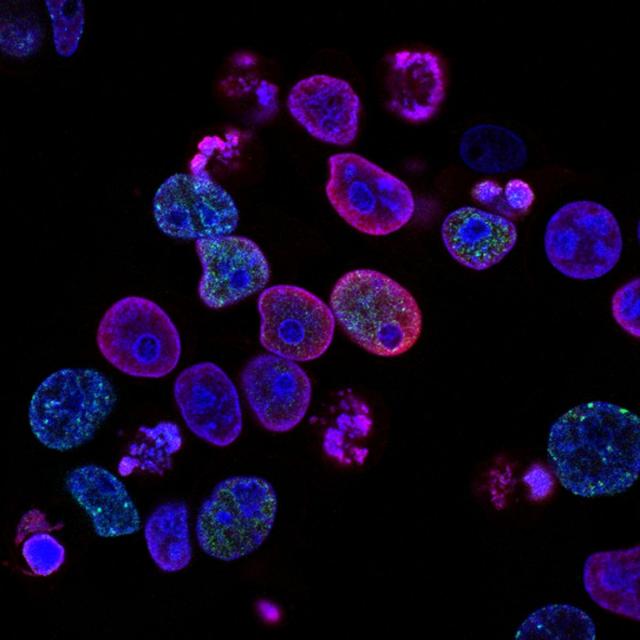
In this course, we will explore the smaller side of biology: molecular biology. We’ll cover basic topics including cell biology and how cells can go “rogue” and turn into cancer, how energy from the sun is transferred to fuel our bodies, basics of genetics and inheritance, and genetic technologies. At the end of this course, we will discuss ethical and moral implications of several exciting and new genetic technologies.

Jun 15th 2026
4 Weeks
D'un infini à l'autre (Coursera) Coursera
École Polytechnique

D'un infini à l'autre (Coursera)

Partez à la découverte de l'infiniment petit et de l'infiniment grand, en compagnie de physiciens et de physiciennes qui vont vous faire découvrir les liens entre la structure de la matière aux distances les plus petites et l'organisation de l'Univers aux distances les plus grandes ce jour, et entre les outils scientifiques utilisés pour les étudier. Vous découvrirez que de nombreux messagers venus de notre Univers (le photon, les neutrinos, ou encore les rayons cosmiques) sont aussi des objets d'intérêt pour les physiciens qui étudient la matière aux échelles les plus petites.

Jun 15th 2026
4 Weeks
Municipal Solid Waste Management in Developing Countries (Coursera) Coursera
École Polytechnique Fédérale de Lausanne

Municipal Solid Waste Management in Developing Countries (Coursera)

Have you come across large piles of garbage in neighborhoods and streets, or smelly waste disposal sites polluting the environment of low and middle income countries? Are you also convinced that improvements are necessary and do you want to know what kind of sustainable solutions are appropriate to better manage waste and enhance recycling and recovery? If yes, this course is for you!

Jun 15th 2026
5-12 Weeks
Personnel & Third-Party Security (Coursera) Coursera
University of California, Irvine

Personnel & Third-Party Security (Coursera)

In this course, you will learn all about the process of implementing effective education, training, and awareness programs. You will also study the role personnel security plays in protecting an organization’s assets, intellectual property, and physical assets. You will also be introduced to the steps required for effective Vendor Risk Management (VRM), including: due diligence, contracting, monitoring & accessing, and termination. Throughout the course, you will engage with current case studies that illustrate the key concepts in your lessons. You will also have the chance to submit assignments in which you will apply the material in a practical application.

Jun 15th 2026
4 Weeks
Understanding Modern Physics III: Simplicity and Complexity (Coursera) Coursera
The Hong Kong University of Science and Technology - HKUST

Understanding Modern Physics III: Simplicity and Complexity (Coursera)

The 20th century was known as the century of physics. In the past 120 years, concepts such as space, time, energy, entropy and particles were understood to much deeper levels. New paradigms of thinking such as relativity and quantum mechanics emerged. This course is the third course in the Understanding Modern Physics series, which covers an introduction to action principle, fundamental particle physics, entropy & information and complexity.

Jun 15th 2026
4 Weeks
Foundation of Structural Dynamics (Coursera) Coursera
ISAE-SUPAERO

Foundation of Structural Dynamics (Coursera)

A course with variable geometry where everyone, we hope, will find personal benefits. The parts can be studied sequentially or independently; and inside each part, elementary learning items can be picked up. Globally, this course proposes a deep knowledge of fundamental dynamics, with possible explicit and implicit applications in structural dynamics, but also in physics and control of any dynamic system (automatics, …).

Jun 15th 2026
5-12 Weeks
Vers l'infiniment grand (Coursera) Coursera
École Polytechnique

Vers l'infiniment grand (Coursera)

Partez à la découverte de l'infiniment grand, en compagnie de physiciens et de physiciennes qui vont vous faire découvrir l'Univers aux distances les plus grandes connues à ce jour et les outils scientifiques utilisés pour l'étudier. Vous comprendrez ce que les scientifiques ont pu apprendre sur l'histoire et la structure de l'Univers, ses composantes, et comment ils ont pu accumuler ces observations sur les étoiles, les galaxies, les amas de galaxies, et l'Univers dans son ensemble.

Jun 15th 2026
4 Weeks
Wind resources for renewable energies (Coursera) Coursera
École Polytechnique

Wind resources for renewable energies (Coursera)

The main goal of this course is to get the necessary knowledge on atmospheric and fluid dynamics in order to quantify the wind resource of a local or regional area. We’ll learn about basic meteorology, the specific dynamics of turbulent boundary layers and some standard techniques to estimate wind resources regardless of the type of turbine used or the level of efficiency achieved.

Jun 15th 2026
4 Weeks