Image and video processing: From Mars to Hollywood with a stop at the hospital (Coursera)

Offered by Duke University,
Image and video processing: From Mars to Hollywood with a stop at the hospital (Coursera)

In this course, you will learn the science behind how digital images and video are made, altered, stored, and used. We will look at the vast world of digital imaging, from how computers and digital cameras form images to how digital special effects are used in Hollywood movies to how the Mars Rover was able to send photographs across millions of miles of space.

Class Deals by MOOC List - Click here and see Coursera's Active Discounts, Deals, and Promo Codes.

The course starts by looking at how the human visual system works and then teaches you about the engineering, mathematics, and computer science that makes digital images work. You will learn the basic algorithms used for adjusting images, explore JPEG and MPEG standards for encoding and compressing video images, and go on to learn about image segmentation, noise removal and filtering. Finally, we will end with image processing techniques used in medicine.
This course consists of 7 basic modules and 2 bonus (non-graded) modules. There are optional MATLAB exercises; learners will have access to MATLAB Online for the course duration. Each module is independent, so you can follow your interests.

Syllabus

WEEK 1
Introduction to image and video processing
Learn what is image and video processing. Learn the very basic concepts of human perception needed for understanding image processing. Learn simple tools in signal processing needed to understand following units.

WEEK 2
Image and video compression
JPEG and MPEG are the most successful algorithms in the area, widely used by everybody in a daily basis, and the goal of this unit is to understand how they work. Also to understand why these techniques are important and why they are enabling technologies. Also will describe what is done in the Mars expedition.

WEEK 3
Spatial processing
Some of the most basic tools in image processing, like median filtering and histogram equalization, are still among the most powerful. We will describe these and provide a modern interpretation of these basic tools. Students will then become familiar with simple and still popular approaches. We will also include non-local means, a more modern technique that still uses classical tools.

WEEK 4
Image restoration
The goal of this unit is to complement Unit 3 by adding prior information about the sources of degradation. Students will learn that if we know about the degradation process, we can do better. The objective of this unit is to complete the training with basic and powerful classical tools.

WEEK 5
Image segmentation
Not all parts of the image are the same, and students will learn the basic techniques to partition an image, from simple threshold to more advanced graph cuts and active contours. This is the first unit where student will learn about image analysis and image interpretation, and will learn why this is important, e.g., in medical imaging and object recognition.

WEEK 6
Geometric PDEs
This is all optional material. It will help the students that are more mathematically oriented and want to better understand the math behind next unit's lectures. But you will be able to handle without it.The quiz is therefore practice only.This is the first “advanced” unit and smoothly follows from the previous one. Students will learn very modern tools, widely used today, and will contrast with units 3,4 to illustrate how significantly more advanced mathematical tools are also very useful in image and video analysis. We will connect some of these advanced tools with classical ones, e.g., average with heat flow and median with anisotropic diffusion. This will help to provide unified views to the students.

WEEK 7
Image and video inpainting
Students will get involved with a very exciting topic, since image and video inpainting is one of the most used tools in the movie industry. They will learn the problem, and also how they can approach it from multiple directions. This will also help to illustrate how the same problem can be approached from multiple mathematical angles. We will connect this with Shanon’s work providing yet another angle. If you watched the lectures on PDEs you will have more mathematical background, but you will enjoy this unit and learn without it as well.

WEEK 8
Sparse modeling and compressed sensing
Here the goal is to present one of the most modern tools in image and video processing, and students will learn something that is today at the top of active research. This will also help to illustrate the use of linear algebra and optimization in image and video processing. This is the last formal unit of the course.

WEEK 9
Medical imaging
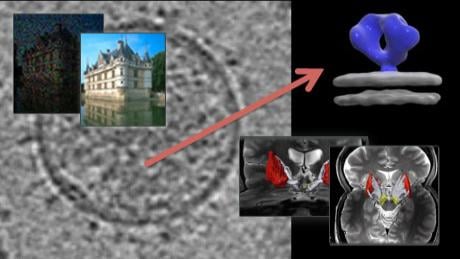
This is a bonus unit. Enjoy it. Image processing has been very successful in medical imaging, and we will use examples from HIV and brain research to illustrate the importance of image processing in solving societal problems. We will describe the basic tools in these exciting applications, from the acquisition to the analysis.
Go to Class
MOOC List is learner-supported. When you buy through links on our site, we may earn an affiliate commission.

Related Courses

System Validation (2): Model process behaviour (Coursera) Coursera
EIT Digital

System Validation (2): Model process behaviour (Coursera)

System Validation is the field that studies the fundamentals of system communication and information processing. It is the next logical step in computer science and improving software development in general. It allows automated analysis based on behavioural models of a system to see if a system works correctly. We want to guarantee that the systems does exactly what it is supposed to do.

Jun 22nd 2026
3 Weeks
Digital Thread: Components (Coursera) Coursera
University at Buffalo,The State University of New York

Digital Thread: Components (Coursera)

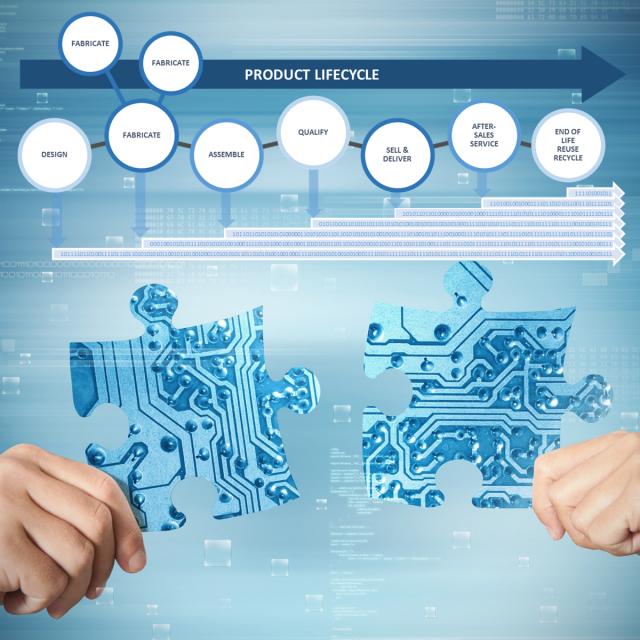
This course will help you recognize how the "digital thread" is the backbone of the digital manufacturing and design (DM&D) transformation, turning manufacturing processes from paper-based to digital-based. You will have a working understanding of the digital thread – the stream that starts at product concept and continues to accumulate information and data throughout the product’s life cycle – and identify opportunities to leverage it.

Jun 22nd 2026
3 Weeks
Digital Thread: Implementation (Coursera) Coursera
University at Buffalo,The State University of New York

Digital Thread: Implementation (Coursera)

There are opportunities throughout the design process of any product to make significant changes, and ultimately impact the future of manufacturing, by embracing the digital thread. In this course, you will dig into the transformation taking place in how products are designed and manufactured throughout the world. It is the second of two courses that focuses on the "digital thread" – the stream that starts at the creation of a product concept and continues to accumulate information and data throughout the product life cycle.

Jun 22nd 2026
5-12 Weeks
Control of Nonlinear Spacecraft Attitude Motion (Coursera) Coursera
University of Colorado Boulder

Control of Nonlinear Spacecraft Attitude Motion (Coursera)

This course trains you in the skills needed to program specific orientation and achieve precise aiming goals for spacecraft moving through three dimensional space. First, we cover stability definitions of nonlinear dynamical systems, covering the difference between local and global stability. We then analyze and apply Lyapunov's Direct Method to prove these stability properties, and develop a nonlinear 3-axis attitude pointing control law using Lyapunov theory. Finally, we look at alternate feedback control laws and closed loop dynamics.

Jun 22nd 2026
4 Weeks
Introduction to Logic (Coursera) Coursera
Stanford University

Introduction to Logic (Coursera)

This course is an introduction to Logic from a computational perspective. It shows how to encode information in the form of logical sentences; it shows how to reason with information in this form; and it provides an overview of logic technology and its applications - in mathematics, science, engineering, business, law, and so forth.

Jun 22nd 2026
5-12 Weeks
Marketing in an Analog World (Coursera) Coursera
University of Illinois at Urbana-Champaign

Marketing in an Analog World (Coursera)

Our new Digital World is dramatically changing the way in products are created, promoted, distributed, and consumed. Although these changes have been revolutionary, we still live in an Analog (or physical) World. For example, even today, over 90% of all sales are still conducted in Analog stores. Thus, both marketers and consumers must simultaneously navigate both the Analog and Digital Worlds on a daily basis.

Jun 22nd 2026
4 Weeks
Copyright for Multimedia (Coursera) Coursera
Duke University,Emory University,University of North Carolina

Copyright for Multimedia (Coursera)

Copyright questions about different formats (data, images, music and video) can be especially difficult. Sometimes the law specifically distinguishes between these different formats, and in most cases there are media-specific considerations that impact a copyright analysis. In this course we will look at four different media, paying special attention to the unique issues for each one and the kinds of information that is important when making copyright decisions for each type of material.

Jun 22nd 2026
4 Weeks
Concurrent Programming in Java (Coursera) Coursera
Rice University

Concurrent Programming in Java (Coursera)

This course teaches learners (industry professionals and students) the fundamental concepts of concurrent programming in the context of Java 8. Concurrent programming enables developers to efficiently and correctly mediate the use of shared resources in parallel programs. By the end of this course, you will learn how to use basic concurrency constructs in Java such as threads, locks, critical sections, atomic variables, isolation, actors, optimistic concurrency and concurrent collections, as well as their theoretical foundations (e.g., progress guarantees, deadlock, livelock, starvation, linearizability).

Jun 22nd 2026
4 Weeks
Hardware Security (Coursera) Coursera
University of Maryland, College Park

Hardware Security (Coursera)

In this course, we will study security and trust from the hardware perspective. Upon completing the course, students will understand the vulnerabilities in current digital system design flow and the physical attacks to these systems. They will learn that security starts from hardware design and be familiar with the tools and skills to build secure and trusted hardware.

Jun 22nd 2026
5-12 Weeks