The Modern and the Postmodern (Part 2) (Coursera)

Offered by Wesleyan University,
The Modern and the Postmodern (Part 2) (Coursera)

This course examines how the idea of "the modern" develops at the end of the 18th century in European philosophy and literature, and how being modern (or progressive, or hip) became one of the crucial criteria for understanding and evaluating cultural change. Are we still in modernity, or have we moved beyond the modern to the postmodern?

Class Deals by MOOC List - Click here and see Coursera's Active Discounts, Deals, and Promo Codes.

Syllabus

WEEK 1
Course Pages

WEEK 2
Intensity and the Ordinary: Sex, Death, Aggression and Guilt
With a focus on Civilization and its Discontents, we examine how Freud’s theories tried to expose profound instincts as they appeared in daily life.

WEEK 3
Intensity and the Ordinary: Art, Loss, Forgiveness
A reading of Virginia Woolf’s modernist novel To the Lighthouse shows how giving up the search for the “really real” can liberate one to attend to the everyday.

WEEK 4
The Postmodern Everyday
We go back to Ralph Waldo Emerson and forward to Ludwig Wittgenstein to consider how forms of life and language games need to foundation to be compelling.

WEEK 5
From Critical Theory to Postmodernism
Through a consideration of Max Horkheimer & Theodor Adorno along with Michel Foucault, we confront the philosophical effort to escape from totality in order to understand the politics of control.

WEEK 6
Paintings II
A very brief consideration of how artists are responding to the loss of foundations to produce work that redefines art.

WEEK 7
Postmodern Identities
We examine short pieces by Judith Butler and Slavjo Zizek to understand how identities get formed (and performed) in a world without foundations.

WEEK 8
Late-term Review
Review of all the thinkers we have studied in Parts I and II of the class, along with some complementary material.

WEEK 9
Postmodern Pragmatisms
After postmodern playfulness, or alongside it, we see the resurgence of the pragmatic impulse to return philosophy to real human problems.
Extra (Optional) Writing Assignment


Go to Class
MOOC List is learner-supported. When you buy through links on our site, we may earn an affiliate commission.

Related Courses

Film, Images & Historical Interpretation in the 20th Century: The Camera Never Lies (Coursera) Coursera
University of London,Royal Holloway, University of London

Film, Images & Historical Interpretation in the 20th Century: The Camera Never Lies (Coursera)

This course is a short taster on the topic of the use of Images, Film, and their use in historical interpretation in the 20th century. It is primarily provided for those who have a general interest in history that draws on photojournalism as primary evidence, and films based on historical events.

Jun 15th 2026
5-12 Weeks
Transmedia Writing (Coursera) Coursera
Michigan State University

Transmedia Writing (Coursera)

Do you have a desire to write a novel, write a screenplay, design a video game? In this project-centered course you will develop your own, original, intellectual property (IP) into a transmedia project containing written versions of your IP on various platforms. You will begin your novel, adapt the first chapters of your novel into the opening scenes of a film or TV show and create a game design concept of your IP.

Jun 15th 2026
5-12 Weeks
Introduction to Typography (Coursera) Coursera
California Institute of the Arts

Introduction to Typography (Coursera)

Typography is the art of manipulating the visual form of language to enrich and control its meaning. It’s an essential area of skill and knowledge for graphic designers. Typography predates modern graphic design by around 500 years; it is rich in rules, conventions, and esoteric terminology—but it remains an exciting space for invention and expression.

Jun 15th 2026
4 Weeks
Exploring Beethoven’s Piano Sonatas Part 2 (Coursera) Coursera
Curtis Institute of Music

Exploring Beethoven’s Piano Sonatas Part 2 (Coursera)

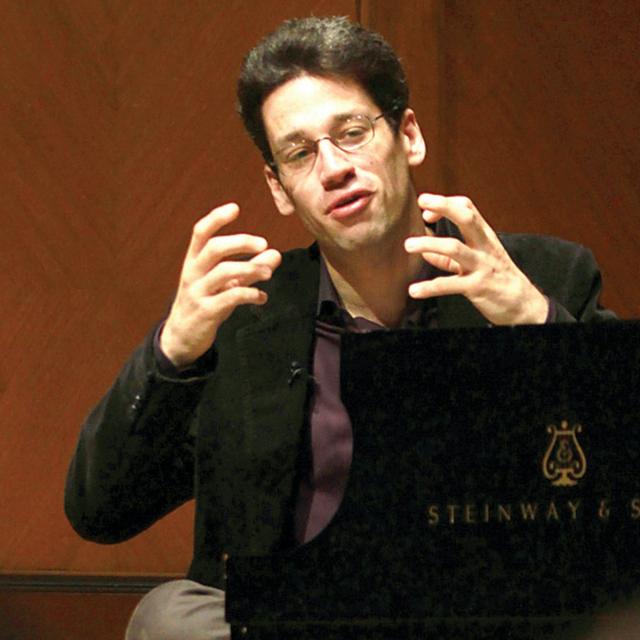
Welcome to Part 2 of Exploring Beethoven's Piano Sonatas! I'm delighted to launch another set of new lectures of this course as Part 2. As before, this class is meant for people of all levels of experience with Beethoven's music (including no experience at all!). Remember that you are able to watch the lectures as many times as you like, at whatever pace is comfortable for you.

Jun 15th 2026
5-12 Weeks
Skepticism (Coursera) Coursera
University of California, Irvine

Skepticism (Coursera)

Skepticism is about doubt, and doubt is everywhere in the world around us today. There are doubts about whether man-made climate change is real, whether vaccinations are harmful, whether we can trust our politicians or our media, and so on. When is such skepticism warranted, and when does it stray into unreasonable territory? How widespread can such skepticism get while still being coherent? How might a radical skepticism have pernicious social consequences, such as by leading to relativism (and just what is relativism, and what is problematic about it)?

Jun 15th 2026
4 Weeks
Organising an Empire: The Assyrian Way (Coursera) Coursera
Ludwig-Maximilians-Universität München

Organising an Empire: The Assyrian Way (Coursera)

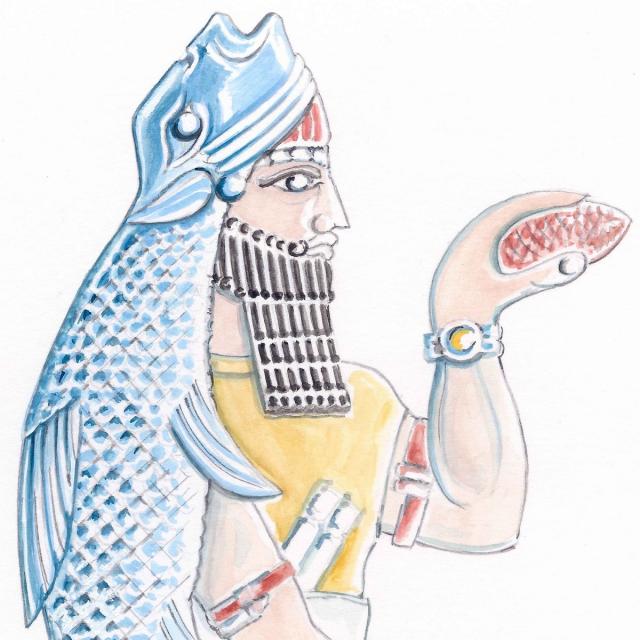
Discover the mighty kingdom of Assyria, which came to be the world’s first great empire three thousand years ago. From the 9th to the 7th centuries BC, during the imperial phase of Assyria’s long history, modern day northern Iraq was the central region of a state reaching from the Mediterranean Sea to the Persian Gulf, and incorporating what is now Iraq, Syria, and Lebanon, as well as half of Israel, and wide parts of south-eastern Turkey, and Western Iran.

Jun 15th 2026
5-12 Weeks
Principles of Secure Coding (Coursera) Coursera
University of California, Davis

Principles of Secure Coding (Coursera)

This course introduces you to the principles of secure programming. It begins by discussing the philosophy and principles of secure programming, and then presenting robust programming and the relationship between it and secure programming. We'll go through a detailed example of writing robust code and we'll see many common programming problems and show their connection to writing robust, secure programs in general.

Jun 15th 2026
4 Weeks
Moral Foundations of Politics (Coursera) Coursera
Yale University

Moral Foundations of Politics (Coursera)

When do governments deserve our allegiance, and when should they be denied it? This course explores the main answers that have been given to this question in the modern West. We start with a survey of the major political theories of the Enlightenment: Utilitarianism, Marxism, and the social contract tradition. In each case, we begin with a look at classical formulations, locating them in historical context, but then shift to the contemporary debates as they relate to politics today.

Jun 15th 2026
5-12 Weeks