Wireless Communications for Everybody (Coursera)

Offered by Yonsei University,
Wireless Communications for Everybody (Coursera)

This course will provide an introduction and history of cellular communication systems that have changed our lives during the recent four decades and will become an essential and inseparable part of human life. The principles of wireless communication theory are covered with emphasis on the essential concept delivery to non-major learners in the easiest way.

Class Deals by MOOC List - Click here and see Coursera's Active Discounts, Deals, and Promo Codes.

Then, it will be covered how such principles are realized and how multimedia services can be delivered in practical LTE cellular systems by which learners are connected and enjoys together in their lives.
After completing this course, learners will be able to understand:

  1. What a cellular system is and how it has been developed so far
  2. The very basic principles how information can be delivered efficiently using radio
  3. How such principles are realized in LTE systems.
  4. How people can be connected and multimedia services can be delivered in LTE systems

Syllabus

WEEK 1
Introduction and History of Cellular Communication Systems
In this part of the course, we will learn the introduction and history of cellular communication system. First, we will take a example of cellular communication system with cell phone. And then, learn about the what a cellular system is and how it has been developed so far. Lastly, we will briefly look into the concepts of future cellular systems.

WEEK 2
Principles of Wireless Communication Theory
In this part of the course, we will learn the fundamental principles of wireless communication theory. I will raise five fundamental questions in the first lecture as follows: i) 'how can we represent information into a binary format?', ii) 'how can information be transferred?', iii) 'how does wireless digital MODEM work?', iv) 'how can high-rate data be delivered reliably?', and v) 'how can many users access simultaneously?'. During the following 5 lectures, you will have the answers.

WEEK 3
Principles of Wireless Resource Management
In this part of the course, we will discuss the basic concept of wireless resource management. I will raise six interesting questions as follows: i) 'how does the interference affect the capacity of wireless networks?', ii) 'why does the cellular system look like as of today?', iii) 'Increasing the number of cells increases the capacity?', iv) 'how is 5G cellular being shaped?', v) 'how does the interference management increase the capacity?' and Ⅵ) 'how does scheduling increase the average capacity?'.

WEEK 4
Multiple Antenna Technologies
In this part of the course, we will learn how multiple antennas can be efficiently used in different strategies for communication system enhancement. First, we look in to the basics of antenna, and then learn about the three main gains that are achievable by multiple antennas: array, diversity, and spatial multiplexing. Lastly, we briefly look in to the concepts of single-user MIMO and multi-user MIMO.

WEEK 5
Physical Layer Design of LTE systems
In this part of the course, we will learn how the fundamental principles of wireless communication theory, resource management, and multiple antenna technology are implemented in the LTE system.

WEEK 6
LTE Cellular Networks and Services
In this course, we will discuss LTE cellular networks.
Go to Class
MOOC List is learner-supported. When you buy through links on our site, we may earn an affiliate commission.

Related Courses

Interfacing with the Arduino (Coursera) Coursera
University of California, Irvine

Interfacing with the Arduino (Coursera)

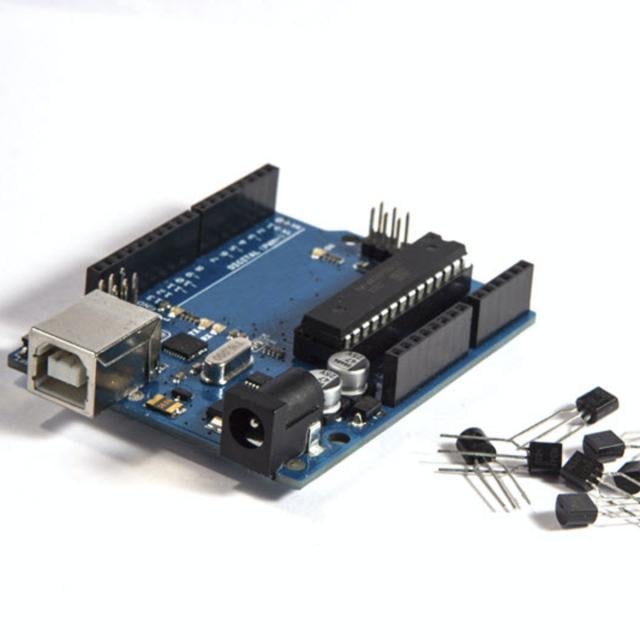
Arduino senses the environment by receiving inputs from add-on devices such as sensors, and can control the world around it by adjusting lights, motors, and other actuators. In this class you will learn how and when to use the different types of sensors and how to connect them to the Arduino. Since the external world uses continuous or analog signals and the hardware is digital you will learn how these signals are converted back-and-forth and how this must be considered as you program your device. You'll also learn about the use of Arduino-specific shields and the shields software libraries to interface with the real world.

Jun 22nd 2026
4 Weeks
Tech for Good: The Role of ICT in Achieving the SDGs (edX) EdX
SDGAcademyX,SDG Academy

Tech for Good: The Role of ICT in Achieving the SDGs (edX)

What opportunities and challenges do digital technologies present for the development of our society? Tech for Good was developed by UNESCO and Cetic, the Brazilian Network Information Center’s Regional Center for Studies on the Development of the Information Society. It brings together thought leaders and changemakers in the fields of information and communication technologies (ICT) and sustainable development to show how digital technologies are empowering billions of people around the world by providing access to education, healthcare, banking, and government services; and how “big data” is being used to inform smarter, evidence-based policies to improve people’s lives in fundamental ways.

Self Paced
Self-Paced
Aspectos básicos de la asistencia técnica (Coursera) Coursera
Google

Aspectos básicos de la asistencia técnica (Coursera)

Este curso es el primero de una serie que tiene como objetivo prepararte para un rol como especialista de soporte de TI de nivel inicial. En este curso, serás introducido en el mundo de la tecnología de la información, o TI. Aprenderás sobre las diferentes facetas de la tecnología de la información como hardware y software informático, Internet, solución de problemas y servicio al cliente.

Jun 23rd 2026
5-12 Weeks
Impacto de las TIC en la vida de las familias (edX) EdX
The Pontificia Universidad Javeriana,JaverianaX

Impacto de las TIC en la vida de las familias (edX)

Este MOOC les brinda a sus participantes elementos conceptuales y prácticos para la asesoría a familias desde una perspectiva sistémica. La presencia de las TIC en la vida de las familias es un tema en construcción, dada la permanente movilidad de la era de la información y los constantes cambios que esta plantea en un mundo que está en permanente transformación.

Self Paced
Self-Paced
Introduction to Radio Network Optimization (FutureLearn) FutureLearn
Amdocs

Introduction to Radio Network Optimization (FutureLearn)

Learn to improve the performance, coverage and capacity of radio access networks (RAN) with experienced Amdocs engineers. When planning network coverage and capacity, communication service providers consider certain constraints and subscriber behaviour. When the network goes live, the real-life behaviour is often different.

No sessions available
4 Weeks
The Classroom and the World (FutureLearn) FutureLearn
British Council

The Classroom and the World (FutureLearn)

Take control of your CPD and learn how to integrate 21st century skills and ICT into your English classroom. This teachers’ CPD course is dedicated to exploring tech and soft skills for the 21st century and how to incorporate them into your English as a Foreign Language (EFL) classroom. Focusing on professional practices outlined in the British Council’s teacher development framework, it will build your knowledge and confidence in: Integrating ICT into the classroom Promoting 21st century skills Using multilingual approaches Understanding educational policies and practice.

No sessions available
4 Weeks
Crash Course on Python (Coursera) Coursera
Google

Crash Course on Python (Coursera)

This course is designed to teach you the foundations in order to write simple programs in Python using the most common structures. No previous exposure to programming is needed. By the end of this course, you'll understand the benefits of programming in IT roles; be able to write simple programs using Python; figure out how the building blocks of programming fit together; and combine all of this knowledge to solve a complex programming problem.

Jun 23rd 2026
5-12 Weeks
Industrial IoT Markets and Security (Coursera) Coursera
University of Colorado Boulder

Industrial IoT Markets and Security (Coursera)

This course can also be taken for academic credit as ECEA 5385, part of CU Boulder’s Master of Science in Electrical Engineering degree. Developing tomorrow's industrial infrastructure is a significant challenge. This course goes beyond the hype of consumer IoT to emphasize a much greater space for potential embedded system applications and growth: The Industrial Internet of Things (IIoT), also known as Industry 4.0. Cisco’s CEO stated: “IoT overall is a $19 Trillion market. IIoT is a significant subset including digital oilfield, advanced manufacturing, power grid automation, and smart cities”.

Jun 22nd 2026
5-12 Weeks
Networks Illustrated: Principles without Calculus (Coursera) Coursera
Princeton University

Networks Illustrated: Principles without Calculus (Coursera)

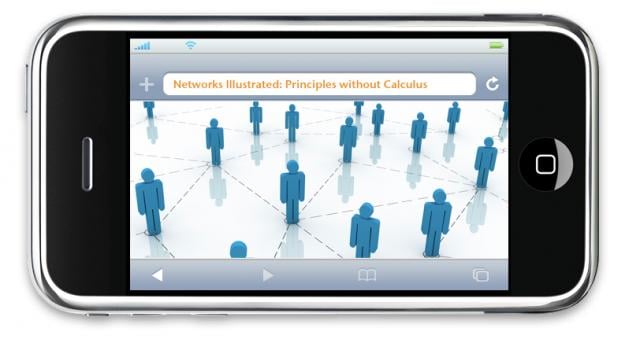
What makes WiFi faster at home than at a coffee shop? How does Google order its search results from the trillions of webpages on the Internet? Why does Verizon charge $15 for every GB of data we use? Is it really true that we are connected in six social steps or less? These are just a few of the many intriguing questions we can ask about the social and technical networks that form integral parts of our daily lives. This course is about exploring the answers, using a language that anyone can understand.

Aug 1st 2022
5-12 Weeks
Conceptos y Herramientas para la Física Universitaria (Coursera) Coursera
Tecnológico de Monterrey

Conceptos y Herramientas para la Física Universitaria (Coursera)

Este curso provee al estudiante con conceptos y herramientas matemáticas para modelar problemas en física, que al aplicar podrá enfrentar con éxito los cursos de física universitarios. Así pues, la filosofía de este curso consiste en cubrir temas conceptuales relativos a la Física y desarrollar tu capacidad de aprender y aplicarlos en tu vida profesional.

Jun 22nd 2026
5-12 Weeks